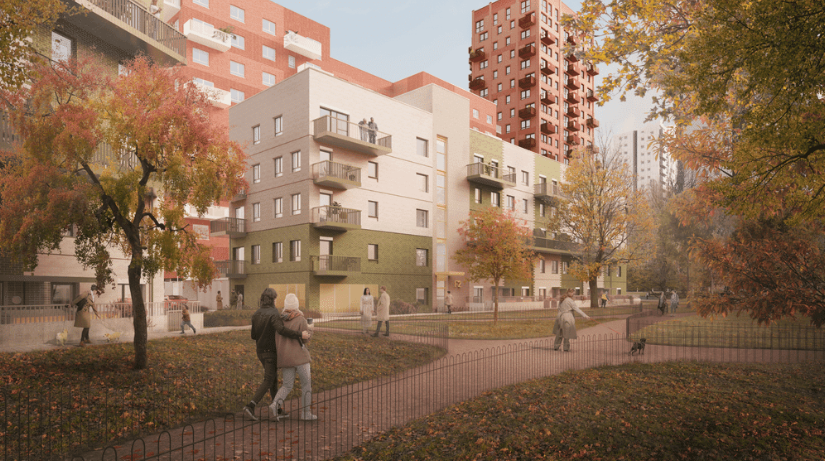
A place in the bigger picture
9th to 13th November 2026

Bruntwood SciTech's Melbourn Science Park scheme targets a wider range of businesses
National investment priorities eventually arrive in a particular place. For the people living nearby, the question is what that investment will contribute locally. The government’s Data Centre Covenant makes this relationship explicit, linking support for strategic infrastructure to benefits that host communities can recognise.
There is a practical argument behind that approach. A data centre might serve customers far beyond its location, while its demands on electricity infrastructure are felt much closer to home. Explaining its national importance only answers part of the question about why it should be built there.
The covenant asks strategic developers to agree substantial local investment beyond existing planning obligations. Communities would have a say in where that money goes. Environmental reporting would also make the operation of these facilities more visible, providing evidence against which commitments could be assessed.
In return, government is offering intervention to help secure power and accelerate planning. This is a proposed bargain with obligations on both sides. Developers seeking that support must demonstrate a wider contribution, while government needs to make the delivery advantage clear enough for them to plan around it.
That relationship between investment and place runs through the week’s development news, although it takes different forms. At Slough’s North West Quadrant, the approved Muse and Homes England plans will make the former university site part of town-centre life again. Homes sit alongside substantial workspace, with a central park and community facilities giving the neighbourhood a broader purpose.
Its position beside the railway station provides a strong starting point. The task is to connect the vacant land to the activity around it and create reasons for people to move through it. The proposed temporary uses are worth noting here: a long regeneration programme need not leave every part of a site waiting for the final buildings before it contributes something.
Bury Interchange shows how transport investment supports that wider process. The first phase to be delivered by Willmott Dixon, includes a footbridge that will improve access now and preserve the route to trams during the next stage of redevelopment. It is a relatively modest piece of infrastructure within a larger ambition, but it helps make the sequence of works possible.
That is an important part of regeneration which headline development values can obscure. Existing places have to keep functioning while they change. Maintaining access allows the next phase to proceed without severing the connections on which passengers already depend.
In Leeds BDP has been appointed to the Royal Armouries’ proposed expansion on the city's waterfront, which builds on an established destination. More exhibition and events space would give the venue greater capacity, while immersive experiences would broaden its offer. The appointment of BDP takes that ambition into further design work, with the museum and existing event facilities intended to remain open during redevelopment.
The project’s value to the waterfront will depend partly on how activity extends beyond the venue itself. A larger programme of events offers the prospect of more people spending time in the area. Building on an existing cultural institution gives that ambition a recognisable foundation.
At Melbourn Science Park, Bruntwood SciTech is also investing around an established community, with a particular focus on accommodating a wider range of businesses. Flexible office and laboratory formats acknowledge that innovation companies do not all need the same premises. Some require technical facilities close to administrative teams, and their needs will change as they grow.
The investment is therefore as much about the usefulness of the accommodation as its specification. Providing different levels of fit-out gives businesses more options when choosing space. The existing campus and its proximity to Cambridge provide the context in which that offer can develop.
These projects serve very different markets, but each pays attention to how investment fits its setting. The strongest development case explains what a place needs and how the proposed use will contribute. Local benefits become more credible when they are part of that reasoning from the outset.
The government’s Data Centre Covenant brings a more formal version of this expectation to a sector whose infrastructure serves national priorities. Its success will depend on whether the bargain works in practice. Host communities need a meaningful role, and developers need a dependable route through the barriers government has offered to address.
One to Watch: Science parks broadening their market
Bruntwood SciTech’s investment at Melbourn reflects an approach to science property that accommodates a wider range of innovation businesses. Engineering and digital companies may need technical R&D space alongside offices without requiring a conventional laboratory building. It is worth watching how demand for that combination shapes science parks’ next phase of investment, particularly the flexibility designed into refurbished space.
Risk Radar: An offer awaiting definition
The government has yet to define which data centres qualify as strategic or set out the additional criteria they must meet. That leaves a significant uncertainty at the centre of its offer. Developers need to understand eligibility before they can judge how the covenant affects a project’s programme and commitments.
Further detail needs to follow promptly. A framework intended to accelerate development risks adding another period of uncertainty if the obligations become clearer before the promised support does. Government will have to turn its offer into workable decisions for the covenant to provide the confidence it seeks.
Read our recent This Week columns
9th to 13th November 2026
A place in the bigger picture
2nd November to 6th November 2026

The work before the work
26th October to 30th October 2026
Making room in the city
19th to 23rd October 2026