Keeping places working
23rd November to 27th November 2026

BAM's school projects show the importance of working in harmony with building occupant needs
A place has to work while it changes. That is obvious when a school has to keep teaching through a rebuild. It is just as relevant to a town centre that needs to attract people while its next phase is still on the drawing board. This week’s projects show why keeping a place useful belongs in the development plan from the start.
BAM UK & Ireland’s school rebuilds make that point plainly. Steyning Grammar School will bring three sites together on one campus, with work phased through to 2030 to limit disruption. At Bradfields Academy, the school has to continue supporting pupils with special educational needs and disabilities throughout construction. How each school operates during the work is part of the brief. It shapes what BAM can build and when.
In Eccles, the issue is how to keep a town centre active while longer-term proposals take shape. Salford City Council’s approval of the Masterplan Vision gives Muse and the council a direction, with individual projects still to be worked up. Temporary uses give the partners a way to do something useful in the meantime. They could also show which activities draw people into the centre and which deserve a permanent place in it.
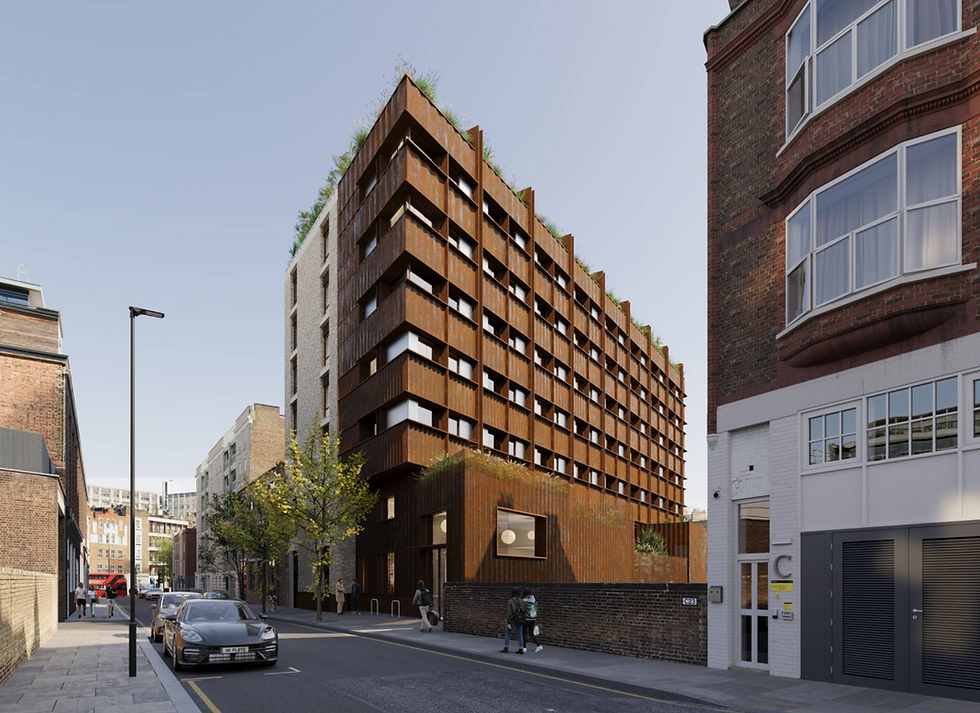
The co-living scheme at Finsgate House shows what happens when that thinking informs the design. HUB’s consultation led to space for local groups being included in the approved plans. The community hub gives people who will never live in the building a reason to use it. At Arena Central, Kier Property’s proposed pedestrian links to Serpentine Walk raise a related point: how people move past and through a development matters alongside what residents find inside it.
Duxford offers a different view of what it means to build around a place that already works. HBD’s aviation technology campus draws much of its purpose from the airfield next door. Runway access gives businesses somewhere to test what they develop, while the proposed research and manufacturing space gives them room to take that work towards production. The existing infrastructure helps explain why the campus belongs there.
The practical question for a development team is what people already rely on and what the project could make more useful. Answering it early can change the order of a build or the way a new building meets the street. Those decisions help determine how much value a scheme brings to its surroundings long before the opening day.
One to Watch: Space to move beyond the prototype
HBD’s Duxford plans point to a gap that science and technology property can help fill. A business moving from research towards production may need workshop space and access to testing facilities before it is ready for a factory of its own. Watch how developers respond to that stage of growth, particularly where existing specialist infrastructure makes it possible to offer facilities that a conventional business park cannot.
Risk Radar: The gap between phases
Construction schedules measure progress towards completion. People using a place experience the disruption in between. When a later phase slips, a temporary entrance or detour can become part of everyday life for much longer than planned. On projects that stay open during redevelopment, procurement and programmes need to make clear who will maintain access and keep temporary facilities usable if the timetable changes.
Read our recent This Week columns
16th to 20th November 2026

What makes a site worth building on?
9th to 13th November 2026

A place in the bigger picture
2nd November to 6th November 2026

The work before the work
26th October to 30th October 2026